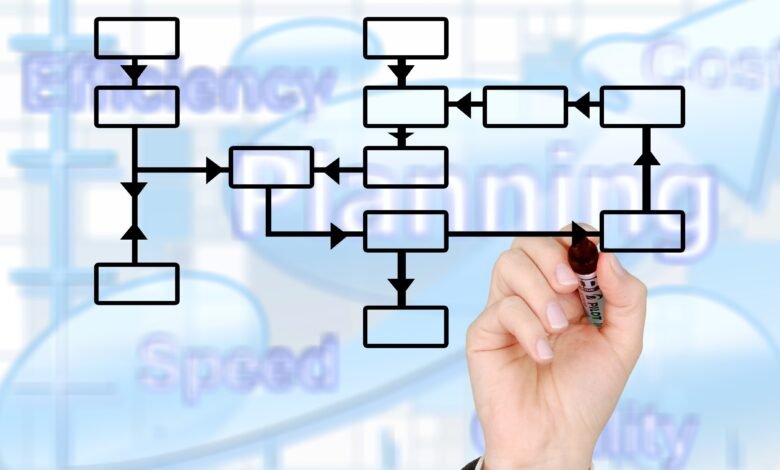
In order to be able to build an effective process from scratch, start by defining your main goal, define the steps in a collaborative way, and ensure a simple and repeatable activities.
1. Define the Purpose (The “Why”)
Identify the outcome: Identify what the process is needed for and what sort of success looks like before writing any rules.
Goal could be 1000 visits a day and 2 sales a day.
Pick a starting point: Select one single and frequently repeated task or a high-friction pain point rather than trying to overhaul your entire operation at once.
What could a high friction pain point?
2. Visualize your workflow:
Gather your team: Involve the people who actually perform the work daily.
You will need someone to perform the work daily
Use physical or digital boards: Visualize your workflow using sticky notes on a wall, a whiteboard, or digital visual spaces.
◦ Standardize basic symbols:Circles: Start and end points.Rectangles: Individual actions or steps (one action per box).Diamonds: Decision points or forks in the road (e.g., “Is payment approved?”).
Trace the main road: Focus first on the primary most common scenario first, leaving rare case scenarios for later.
3. Assign Ownership and Details
Define key roles: Clarify who does what and when, using a RACI chart (Responsible, Accountable, Consulted, Informed) if helpful.
Define your tools: choose your software, templates, or automation tools that you will use at each step.
System improvement team: Continuous improvement, Assign a specific team member to manage and improve the system, not just execute single tasks.
4. Document and Capture
Keep it concise: Avoid bloated 30-page manuals. Use clear checklists, quick Loom videos, or step-by-capturing tools like Tango.
Build actionable checklists: Convert your map into a digital task list or template inside project management tools like ClickUp or Asana.
5. Test and Iterate
Pilot the process: Run the new workflow through a few real-world cycles with an engaged group of users.
Refine continuously: Collect feedback, measure results against your initial goals, and update the steps as your team grows.